Types of Windows: All 15 Styles Compared (Costs, Pros & Cons)
Advertising disclosure: United Renewals is free to use. We may be compensated when you request quotes through our partners, which can affect which offers appear. See “How We Make Money” in our footer for full details.
Get free, no-obligation window quotes from vetted local installers
Get free quotes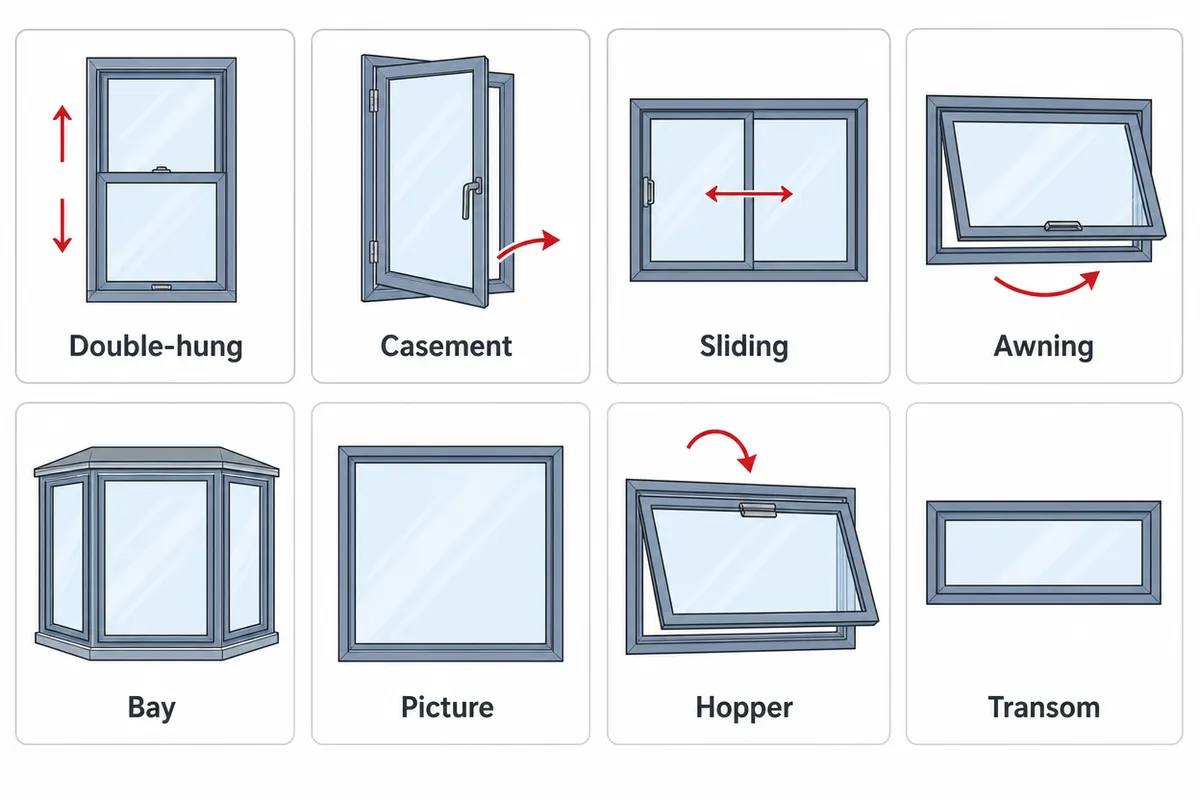
The 15 window styles compared at a glance
Cost ranges below are national installed estimates (window plus labor) drawn from public contractor averages and manufacturer price guides — see our window replacement cost guide for the full cost breakdown. Actual pricing varies by market, size, frame material (vinyl, fiberglass, wood, aluminum), and glass package (double-pane vs. triple-pane matters as much as style).
Energy ratings reflect how tightly each style seals — compression-seal styles (casement, awning, hopper, picture) generally beat sliding-seal styles on air infiltration.
| Style | Installed cost (per window) | Ventilation | Energy rating | Best room | Maintenance |
|---|---|---|---|---|---|
| Double-hung | $300 – $850 | Good | Better | Bedrooms, living rooms | Low |
| Single-hung | $150 – $600 | Fair | Better | Budget builds, bedrooms | Low |
| Casement | $350 – $1,200 | Excellent | Best | Kitchens, hard-to-reach spots | Medium |
| Awning | $350 – $1,050 | Good | Best | Bathrooms, basements | Medium |
| Sliding | $350 – $1,200 | Good | Good | Wide walls, patios | Low |
| Hopper | $250 – $650 | Fair | Best | Basements, bathrooms | Low |
| Jalousie | $175 – $550 | Excellent | Poor | Porches, mild climates | High |
| Picture (fixed) | $300 – $1,300 | None | Best | Great rooms, stairwells | Very low |
| Glass block | $400 – $1,200 | None | Better | Basements, bathrooms | Very low |
| Bay | $1,000 – $4,500 | Good | Better | Living rooms, dining | Medium |
| Bow | $1,500 – $6,500 | Good | Better | Front-facing rooms | Medium |
| Garden | $1,000 – $4,000 | Good | Good | Kitchens | Medium |
| Transom | $200 – $700 | Optional | Best | Above doors/windows | Very low |
| Skylight | $900 – $3,500 | Optional | Good | Attics, dark rooms | Medium |
| Egress | $1,000 – $5,000 | Excellent | Better | Basements, bedrooms | Low |
National installed estimates (window + labor). Final cost depends on size, frame material, glass package, and local labor rates.
Operable windows (open for ventilation)
Double-hung — Both sashes slide and most tilt inward for easy cleaning — the most popular style in North America because it fits any room and vents safely from the top on upper floors. Cons: two sliding seals mean slightly more air infiltration than compression styles.
Single-hung — Identical look to double-hung, but only the bottom sash moves. The fixed top sash lowers cost and removes one air-leak point. Cons: the top pane doesn't open, so cleaning it from outside is harder on upper floors.
Casement — Hinged on the side and cranked open like a door, so the full opening ventilates and the sash presses tight against the frame when closed — one of the best-sealing, most energy-efficient operable styles (see our full casement vs. double-hung comparison). Cons: cranks wear over time; the sash projects outward.
Awning — Hinged at the top and swings out from the bottom, so it can stay open during light rain. Ideal above sinks, in bathrooms, or paired with picture windows. Cons: limited to smaller sizes and projects into walkways.
Sliding — One or more sashes glide horizontally on a track — perfect for wide, short openings and rooms facing decks or patios. Cons: sliding seals leak more air, and tracks collect dirt.
Hopper — Hinged at the bottom and tilts inward from the top — the inverse of an awning, common in basements and small bathrooms. Cons: the open sash intrudes into the room and sizes are limited.
Jalousie — Parallel glass slats that pivot together like blinds for maximum airflow. Best on porches and in warm, mild climates. Cons: poor energy efficiency and security — rarely right for cold climates.
Fixed & specialty windows
Picture window — A large, non-opening pane that delivers unobstructed views and the best energy efficiency of any style (no moving parts to leak). Best for great rooms, stairwells, and framing a view.
Glass block — Stacked, mortared glass blocks that add light and privacy while resisting break-ins and moisture. Common in basements and bathroom walls.
Bay window — Three panels projecting outward at angles (a fixed center flanked by two operable units), creating an interior shelf or seat and pulling in light from three directions.
Bow window — Four or more panels curved in a gentle arc for a panoramic, rounded projection. More glass and labor than a bay, so it sits at the top of the cost range.
Garden window — A small box that projects outward like a mini greenhouse — ideal over a kitchen sink for herbs and plants.
Transom window — A short decorative or venting window installed above a door or another window to add daylight and height.
Skylight — A window set into the roof to flood dark rooms with daylight; available fixed or vented. Installation is more complex due to roof structure and flashing.
Egress window — A code-required exit window (common in finished basements and bedrooms) sized large enough for a person to escape a fire. Usually a casement, hopper, or sliding unit meeting minimum opening dimensions; basement installs often add an exterior window well.
Which window is right for me?
- Need the most ventilation? Choose casement or jalousie (mild climates only).
- Want the best energy efficiency? Pick a picture, casement, awning, or hopper — all seal by compression. Then compare glass and frame options in our energy-efficient windows guide.
- On a budget? Single-hung and hopper deliver the lowest installed cost.
- Finishing a basement? Code likely requires an egress window; pair with hopper or glass block for the rest.
- Wide opening or patio-facing wall? A sliding window fits best and costs less than casements at large sizes.
- Want architecture and resale appeal? A bay or bow window makes the biggest visual statement.
- Dark interior room or attic? Add a skylight or transom for borrowed light.
Pro tip from our network contractors
Most homes use a mix of styles — double-hung in bedrooms, casement over the kitchen sink, a picture window in the living room, and hopper or egress units below grade. A good installer will help you match the style to each opening.
The prices above are national estimates — the only way to know your real number is a local quote, and comparing two or three bids side by side is the fastest way to see how each style prices out in your market. For a full walkthrough of frame materials, glass packages, and vetting installers, see how to choose replacement windows.
Request free window quotes from pre-screened installers near you
Get free quotesFrequently asked questions
What is the most popular type of window?
The double-hung window is the most popular style in North America because both sashes open for airflow, most tilt in for easy cleaning, and it fits nearly any home style and room.
What is the most energy-efficient window style?
Fixed picture windows are the most efficient because they have no moving parts to leak air. Among operable styles, casement, awning, and hopper windows lead because their sashes press tight against the frame with a compression seal. Look for the ENERGY STAR label and a low U-factor for your climate zone.
How much does it cost to replace a window?
Nationally, a single replacement window typically runs $300 to $850 installed for common double-hung units, while large specialty windows like bay and bow can reach $1,500 to $6,500. Final cost depends on size, frame material, glass package, and local labor rates.
What is an egress window and do I need one?
An egress window is an exit window large enough for a person to climb out during an emergency. Building codes generally require one in any finished basement and in bedrooms, so it's often mandatory when converting a basement into living space.
What is the difference between single-hung and double-hung windows?
In a double-hung window, both the top and bottom sashes move; in a single-hung window, only the bottom sash opens while the top stays fixed. Single-hung windows cost less and seal slightly better, but double-hung windows are easier to clean and can vent from the top.
Which window style is best for a bathroom?
Awning and hopper windows are ideal for bathrooms because they provide ventilation while keeping privacy and can stay open during light rain. Glass block is a good fixed option where you want light without a view.
Keep reading
Ready to get window replacement quotes?
Get matched with vetted, licensed local pros and compare free, no-obligation quotes.
100% free · No obligation · Licensed & vetted pros
Other projects worth pricing
Most homeowners bundle exterior work while the crew and access equipment are already on site — it usually costs less than booking each job separately. Quotes are free and carry no obligation.