How to Choose Replacement Windows: The Complete 2026 Buying Guide
Advertising disclosure: United Renewals is free to use. We may be compensated when you request quotes through our partners, which can affect which offers appear. See “How We Make Money” in our footer for full details.
Know what you want? Get free quotes from vetted local window pros
Get free quotes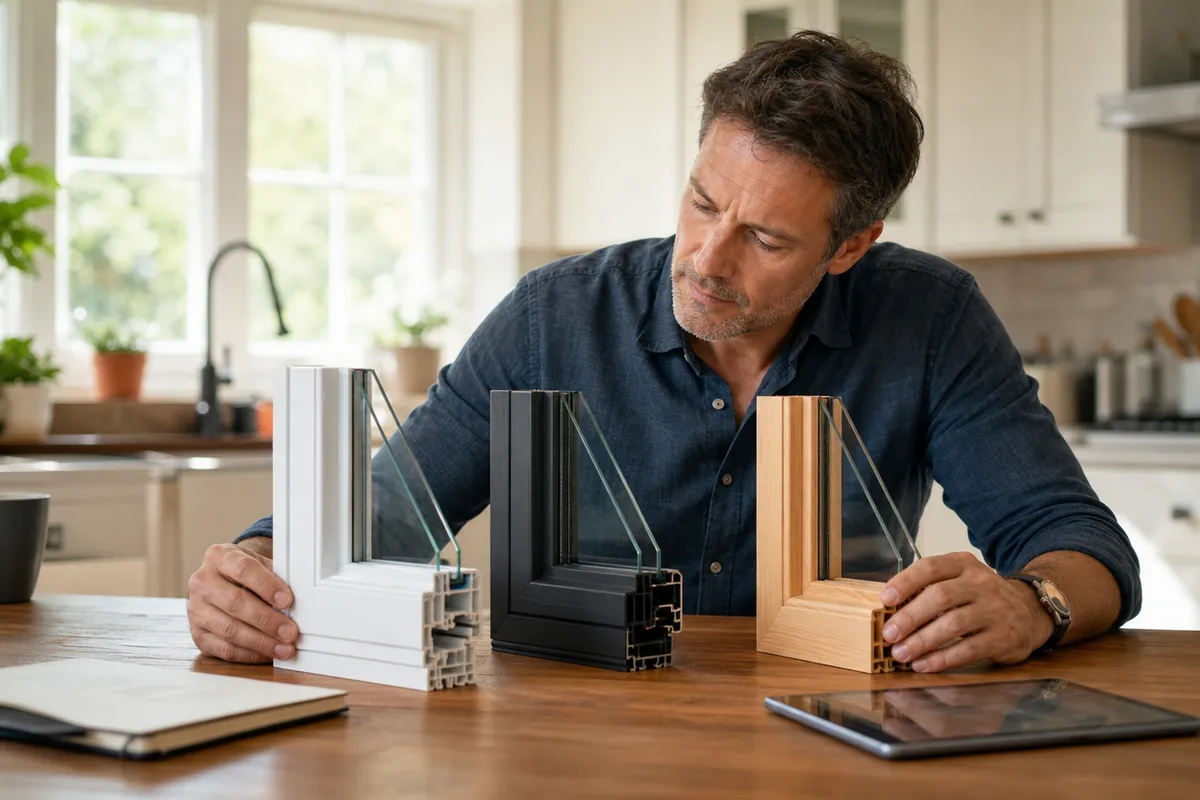
Why trust a marketplace instead of a manufacturer's guide?
Every "buying guide" published by a window brand has one job: sell you *their* windows. United Renewals doesn't manufacture or install anything — we connect homeowners with vetted local installers regardless of which brand or material you pick. That means we can tell you when a cheaper option is genuinely the smarter buy. Make the decisions on the merits below, then let 2–3 local pros compete for your project.
1. Frame material — the choice that drives price and lifespan
Your frame material sets the tone for cost, maintenance, and how long the window lasts.
- Vinyl — most popular and most affordable (roughly $300–$800 per window installed). Low maintenance, good energy efficiency, limited color options.
- Fiberglass — stronger and more stable than vinyl, paintable, long-lived (~$500–$1,200 per window). See vinyl vs. fiberglass compared.
- Composite — vinyl/wood-fiber blends that split the difference on cost and durability.
- Wood — premium look and insulation, but needs upkeep and costs the most ($800–$2,000+ per window).
- Aluminum — durable and slim-framed, but conducts heat; best in mild climates.
Pro tip from our network contractors
"Lifetime" vinyl and "premium" vinyl are often the same extrusion with a different sticker. Ask what the frame is actually made of and how thick the walls are — not just the marketing tier.
2. Glass package — panes and coatings
The glass package matters as much as the frame — it's where most of the energy performance lives.
- Double-pane is the modern baseline: two panes with an insulating gas fill (argon or krypton). Right for most homes.
- Triple-pane adds a third pane for better insulation and sound-dampening, typically 10–20% more cost. Worth it in very cold or very noisy areas; often overkill in mild climates. See double-pane vs. triple-pane.
- Low-E (low-emissivity) coating is a near-invisible metallic layer that reflects heat. It's one of the cheapest upgrades with the biggest efficiency payoff, and the coating is *tuned to your climate* — more solar blocking in the South, more heat retention in the North.
Pro tip from our network contractors
Triple-pane is often upsold for its efficiency, but in a mild climate a good double-pane with the right low-E coating and gas fill performs nearly as well for hundreds less per window.
3. Window style — match the opening to the room
Style affects ventilation, cleaning, view, and price. For the full rundown of every style, see our guide to the types of windows.
- Double-hung — two sashes that slide vertically; both tilt in to clean. The versatile default.
- Casement — crank-out; the best seal and airflow, great over sinks.
- Slider — glides horizontally; budget-friendly for wide openings.
- Picture — fixed, no opening; maximum view and efficiency.
- Bay/bow, awning, garden — specialty styles for specific needs and budgets.
4. Energy ratings — read the NFRC label, not the ad
Every certified window carries an NFRC label. Learn these four numbers:
- U-Factor — how well the window insulates. Lower is better (roughly 0.17–0.30 for efficient windows).
- Solar Heat Gain Coefficient (SHGC) — how much solar heat passes through. Lower for hot climates, higher for cold ones.
- Visible Transmittance (VT) — how much light comes through (higher = brighter).
- Air Leakage (AL) — drafts; lower is better.
Then confirm the window is ENERGY STAR certified for your specific climate zone — the requirements differ across the country. Our energy-efficient windows guide breaks down what actually moves the needle.
Pro tip from our network contractors
A window can be "ENERGY STAR" in one region and not qualify in yours. Match the certification to your zip code, not the national logo.
5. Installation method — insert vs. full-frame
- Insert (pocket) replacement — the new window fits inside the existing frame. Faster, cheaper, less disruptive. Right when the existing frame is sound.
- Full-frame replacement — removes the entire frame down to the studs. Costs more but is the correct call when there's rot, water damage, or you're changing the window size or style.
The install is where most window projects succeed or fail — even a great window will leak and underperform if it's set poorly.
6. Budget — realistic national ranges
| Scope | Typical installed range |
|---|---|
| Single window | $300 – $1,200 |
| Standard double-hung | $600 – $800 |
| Whole home (10 windows) | $6,000 – $12,000 |
| Whole home (15 windows) | $9,000 – $18,000 |
| Triple-pane upgrade | +10–20% over double-pane |
National contractor averages — actual prices vary widely by market, window size, and glass package. Treat these as planning ranges, not quotes.
For the full breakdown by window type, material, and glass package, see our window replacement cost guide. The only way to know your real number is competing quotes from local window pros.
7. Installer & warranty — where the fine print hides
A window is only as good as its warranty and the crew that installs it. Watch for these red flags in the paperwork:
- Prorated coverage that shrinks every year.
- Warranties that cover glass but not labor — a service call can cost more than the part.
- "Lifetime" that quietly means the *product's* lifetime, or that voids if you ever sell the home.
- A manufacturer warranty with no installer workmanship warranty behind it.
Vetting the company is its own decision — sales tactics, deposits, licensing, and the questions to ask are covered in our guide on how to choose a window installer.
The one-page buyer's checklist
- Frame material chosen — and confirmed what it's actually made of
- Glass package set: pane count + low-E tuned to climate + gas fill
- Window style selected per room
- NFRC U-Factor / SHGC noted and ENERGY STAR verified for my zip
- Install method decided: insert vs. full-frame
- Written, itemized quote — material vs. labor separated
- Warranty read: non-prorated? labor included? transferable?
- Installer vetted: licensed, insured, references, workmanship warranty
- Compared at least 2–3 quotes before signing
Ready to price your project?
You've made the decisions — now let vetted local installers compete for the job. Tell us about your windows and United Renewals will match you with 2–3 pre-screened local pros for free quotes. It's fast, and there's no obligation.
Get my free window quotes — compare 2–3 vetted local pros
Get free quotesFrequently asked questions
How do I choose the right replacement windows for my home?
Work through seven decisions in order: frame material, glass package (panes + low-E), window style, energy ratings, installation method, budget, and installer/warranty. Nail the first four and you've chosen the right window; nail the last three and you've hired the right company. Then compare 2–3 local quotes before signing.
What is the best window frame material?
There's no single 'best' — it's a trade-off. Vinyl offers the best value and low maintenance; fiberglass is stronger and longer-lasting; wood looks best and insulates well but costs more and needs upkeep. Choose based on your climate, budget, and how long you plan to stay.
Are triple-pane windows worth the extra cost?
In very cold climates or noisy locations, often yes. In mild climates, a quality double-pane window with the right low-E coating and gas fill usually performs nearly as well for meaningfully less money. Match the glass to your climate, not the sales pitch.
How much do replacement windows cost in 2026?
National contractor averages run roughly $300–$1,200 per window installed (most standard double-hungs land at $600–$800), or about $6,000–$12,000 for a full house of 10 windows, depending on material, glass, and size. These are estimates that vary by market — competing local quotes give you your real number.
Should I get insert or full-frame replacement windows?
Choose insert (pocket) replacement when the existing frame is sound — it's faster and cheaper. Choose full-frame when there's rot or water damage, or when you're changing the window's size or style.
How many window quotes should I get?
At least two to three. Comparing itemized quotes on the same windows is the best way to spot fair pricing, catch upsells, and check warranty terms. United Renewals matches you with vetted local installers for free.
Keep reading
Ready to get window replacement quotes?
Get matched with vetted, licensed local pros and compare free, no-obligation quotes.
100% free · No obligation · Licensed & vetted pros
Other projects worth pricing
Most homeowners bundle exterior work while the crew and access equipment are already on site — it usually costs less than booking each job separately. Quotes are free and carry no obligation.