Energy-Efficient Windows: The Complete 2026 Buyer's Guide
Advertising disclosure: United Renewals is free to use. We may be compensated when you request quotes through our partners, which can affect which offers appear. See “How We Make Money” in our footer for full details.
See what energy-efficient windows cost for your home — free quotes
Get free quotes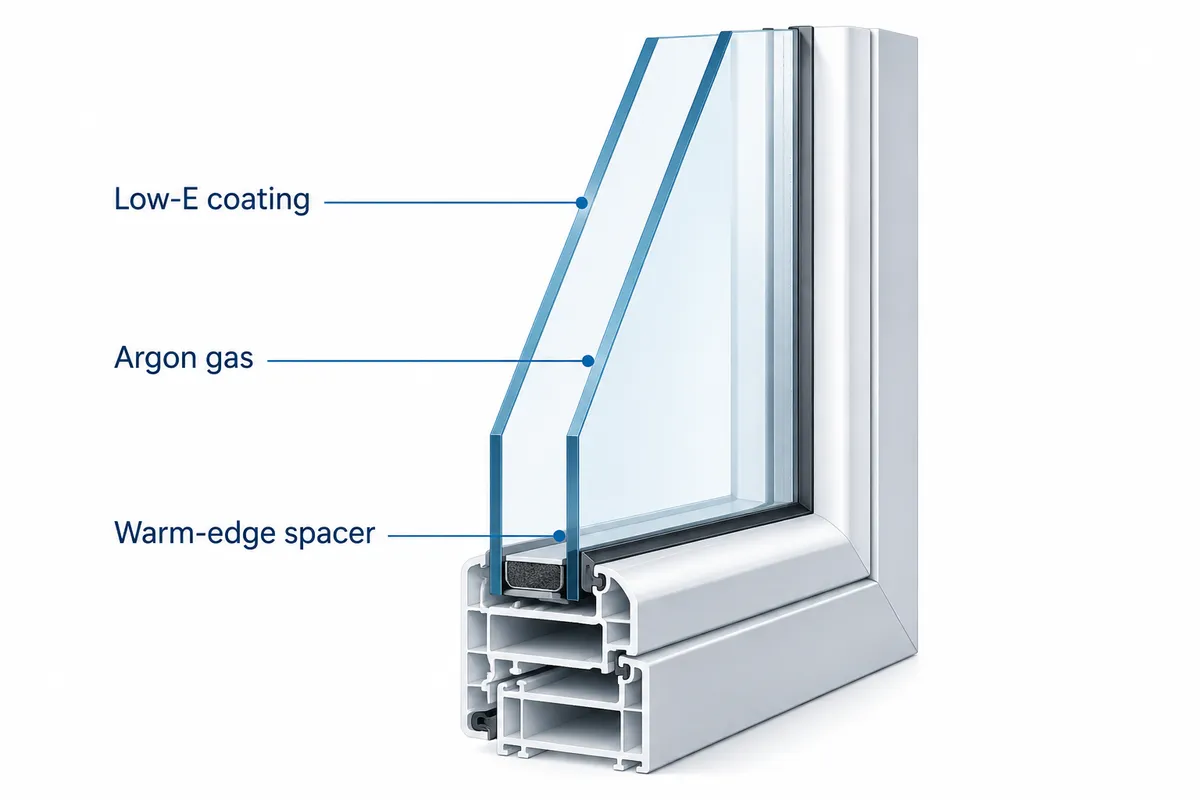
What actually makes a window energy-efficient
Marketing loves phrases like “triple-shield glass.” Ignore them. Every efficient window is defined by six measurable factors, and each one appears on the window's NFRC (National Fenestration Rating Council) label — so you can shop by specs, not sales pitches.
- U-factor (heat loss) — lower is better. U-factor measures how quickly a window loses heat. It typically ranges from 0.15 to 1.20; efficient windows land around 0.15–0.30. The lower the number, the better the window keeps warmth inside — it's the single most important rating for heating-dominated homes.
- SHGC (solar heat gain) — context matters. The Solar Heat Gain Coefficient runs from 0 to 1 and measures how much solar heat passes through. A low SHGC (0.25 or below) blocks heat and helps in hot, cooling-dominated climates; a higher SHGC (0.40+) lets in free winter warmth and can help in cold northern climates. There is no universally “good” SHGC — it depends on where you live.
- Low-E coatings. Low-emissivity coatings are microscopically thin metallic layers on the glass that reflect infrared heat while letting light through. They're the biggest efficiency upgrade per dollar and the reason modern double-pane glass dramatically outperforms old windows. Coatings are tuned differently for hot vs. cold climates.
- Gas fill. The space between panes is filled with an inert gas — usually argon (most common, cost-effective) or krypton (denser, used in thinner triple-pane gaps). These gases insulate better than plain air, lowering the U-factor, and the modest upgrade is standard on most quality windows today.
- Warm-edge spacers. The spacer holds the panes apart at the edge. Older aluminum spacers conduct cold and cause condensation; modern warm-edge spacers (foam or composite) reduce heat loss at the glass perimeter and cut fogging — a small component with an outsized effect on comfort and longevity.
Frame material matters too
The frame can account for a large share of a window's total heat transfer. Common options, roughly from most to least insulating value per dollar:
- Vinyl — best value, low maintenance, good insulation. The most-installed choice.
- Fiberglass — stronger and more stable than vinyl, excellent insulation, higher cost (see vinyl vs. fiberglass windows).
- Composite — engineered blends balancing strength and efficiency.
- Wood — beautiful and a good insulator, but higher maintenance and price.
- Aluminum — durable but conducts heat readily; needs a thermal break to be efficient.
ENERGY STAR basics: the shortcut that actually works
If specs feel overwhelming, the fastest reliable filter is the ENERGY STAR label. ENERGY STAR sets U-factor and SHGC thresholds by climate zone, so a certified window is already matched to your region's needs. The program divides the country into four zones — Northern, North-Central, South-Central, and Southern — each with its own targets.
Climate-zone quick reference
| Climate zone | Priority | Target U-factor | Target SHGC |
|---|---|---|---|
| Northern (cold) | Retain heat | ≤ ~0.22 | Any (higher can help) |
| North-Central | Balanced | ≤ ~0.25 | ≤ ~0.40 |
| South-Central | Block heat | ≤ ~0.28 | ≤ ~0.23 |
| Southern (hot) | Block heat | ≤ ~0.32 | ≤ ~0.23 |
Approximate ENERGY STAR targets — always confirm the current version's thresholds for your exact location.
Pro tip from our network contractors
Rule of thumb: cold climate → prioritize a low U-factor. Hot climate → prioritize a low SHGC. Mixed climate → balance both. A vetted local installer will spec the right combination for your zone.
What energy-efficient windows cost
Prices vary widely by region, frame material, size, and glass package. Based on national contractor averages, expect roughly $450–$1,400 per window installed — vinyl on the lower end, fiberglass or wood on the higher end — or about $5,000–$15,000+ for a whole home of around 10 windows.
Triple-pane, large or specialty shapes, and premium frames push costs higher. These are estimates that shift with your market and home — the only way to know your number is a written quote. For the full breakdown, see the window replacement cost guide.
Are they worth it? Expected energy savings
According to ENERGY STAR, replacing old single-pane windows with certified energy-efficient windows can save a typical household on the order of $100–$580 per year on energy bills, depending on climate and local energy rates. Upgrading from existing double-pane windows saves less — the biggest wins come from replacing single-pane or failed, foggy units. For the full financial picture, see are new windows worth it.
Beyond the dollar savings, homeowners consistently report fewer drafts, less condensation, quieter rooms, and more even temperatures. Note for 2026: the federal 25C energy-efficiency tax credit ended for installations after December 31, 2025 — but many state and utility rebate programs are still live and can meaningfully improve the payback. Check your utility's current programs before you buy.
Bottom line: if your windows are single-pane, drafty, or fogging between the panes, efficient replacements typically pay back through comfort and savings over time. If you already have decent double-pane windows, prioritize based on comfort problems and condition.
How to buy smart
- Identify your climate zone and whether you're heating- or cooling-dominated.
- Read the NFRC label, not the brochure — check U-factor and SHGC first.
- Confirm ENERGY STAR certification for your zone.
- Match the glass package to your climate — Low-E tuning, gas fill, and pane count (double-pane vs. triple-pane).
- Get multiple written quotes so you can compare specs and price side by side — the step where most homeowners overpay or under-spec.
Compare free quotes from vetted local window installers
Get free quotesFrequently asked questions
What is the most important rating for energy-efficient windows?
U-factor (heat loss) and SHGC (solar heat gain) are the two most important. In cold, heating-dominated climates, prioritize a low U-factor. In hot, cooling-dominated climates, prioritize a low SHGC. Both appear on the NFRC label.
Are double-pane or triple-pane windows better?
Triple-pane windows insulate better and reduce noise, but cost more and add weight. For most U.S. homes, quality double-pane windows with Low-E coatings and argon fill are the best value. Triple-pane makes the most sense in very cold climates or for noise-sensitive rooms.
How much do energy-efficient windows cost?
Based on national contractor averages, installed windows typically run about $450–$1,400 each, or roughly $5,000–$15,000+ for a whole home of about 10 windows. Actual pricing varies by frame material, size, glass package, and local market.
How much can I save on energy bills?
ENERGY STAR estimates that replacing single-pane windows with certified energy-efficient windows can save a typical home roughly $100–$580 per year, depending on climate and energy rates. Savings are smaller when replacing existing double-pane windows.
Do energy-efficient windows qualify for tax credits?
Not federally anymore — the 25C Energy Efficient Home Improvement Credit ended for installations after December 31, 2025, so 2026 window installs no longer qualify (be wary of sales materials still quoting it). However, many state and utility rebate programs remain active — check your local utility's current offerings before purchasing.
What is Low-E glass and do I need it?
Low-E (low-emissivity) glass has a microscopic metallic coating that reflects heat while letting light through. It's one of the highest-impact efficiency upgrades and is standard on most quality windows today — for nearly every climate, yes, you want it. The coating is tuned differently for hot vs. cold regions.
Keep reading
Ready to get window replacement quotes?
Get matched with vetted, licensed local pros and compare free, no-obligation quotes.
100% free · No obligation · Licensed & vetted pros
Other projects worth pricing
Most homeowners bundle exterior work while the crew and access equipment are already on site — it usually costs less than booking each job separately. Quotes are free and carry no obligation.