How to Clean Windows Without Streaks: The Complete Method
Advertising disclosure: United Renewals is free to use. We may be compensated when you request quotes through our partners, which can affect which offers appear. See “How We Make Money” in our footer for full details.
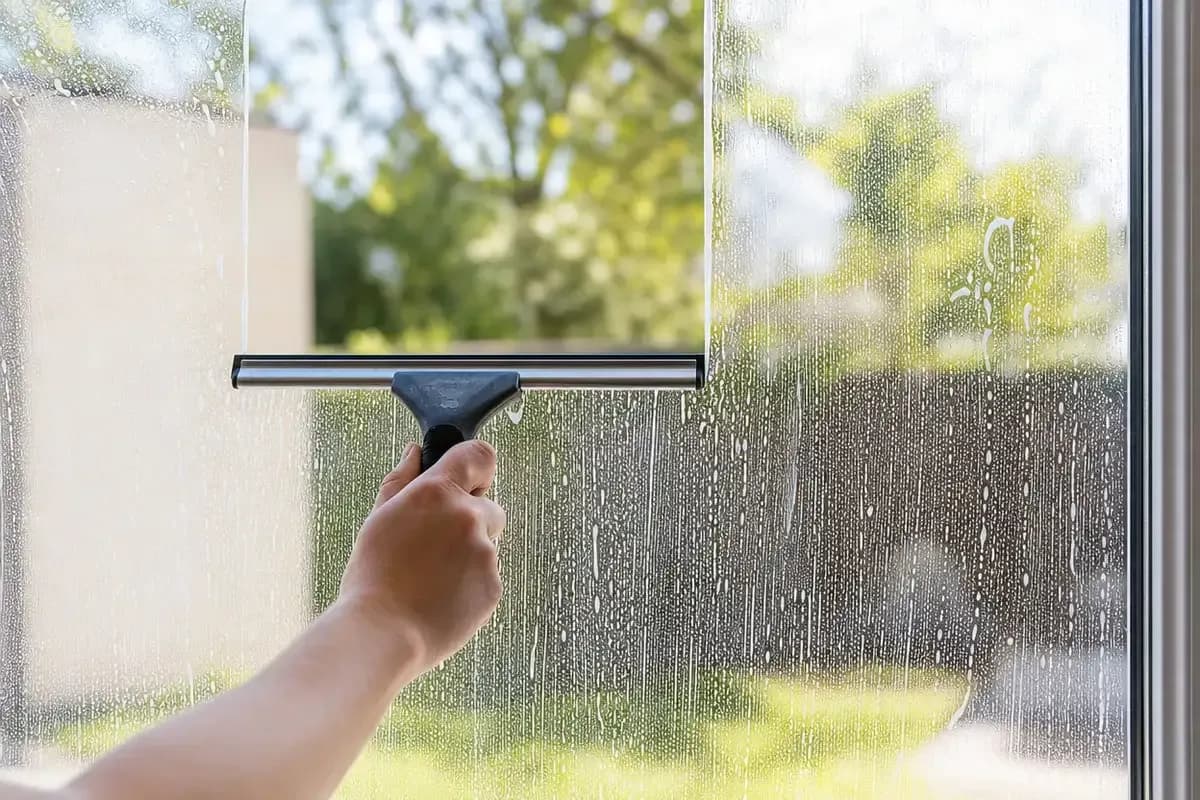
Streaks are almost always caused by three things: cleaning in direct sun, using too much soap, or wiping with paper towels and newspaper that shed lint. Fix those and the glass comes out clear every time. Below is the full system — the cleaning-solution comparison, the exact squeegee technique, how to handle second-story glass safely, and the mistakes that quietly ruin your results.
Tools you actually need
You don't need a professional kit. This covers the whole house for around $30–$60, and every piece lasts years:
- A quality squeegee (10–12 inch brass or stainless channel) — $10–$30
- A microfiber scrubber or sponge for loosening grime
- 2–3 clean microfiber cloths (one damp, one dry, one for edges) — lint-free is the whole point
- A bucket for your solution
- Distilled white vinegar and distilled water (distilled matters — see the hard-water note below)
- A drop of dish soap
- A soft brush or vacuum to remove loose dirt before you wet the glass
- Optional for exteriors: a hose, an extension pole for the squeegee, and a water-fed pole kit for upper floors
For comparison, hiring a pro typically runs roughly $8–$15 per pane, or about $150–$300 for a whole house — worth it for a three-story home, but a DIY kit pays for itself the first weekend.
Best cleaning solution: how the common DIY recipes compare
Most articles just assert that vinegar (or dish soap, or a name-brand spray) is best. Here's how the four most common options actually stack up on streaking, residue, drying speed, and cost:
| Solution | Recipe | Streaks left | Notes |
|---|---|---|---|
| Vinegar + water (+ 1 drop soap) | 1 tbsp vinegar + 1 qt distilled water + 1 drop dish soap | Fewest | Cuts grime, dries fast, no film. The winner. Slight vinegar smell fades in minutes. |
| Dish soap + water | A few drops per quart | Moderate | Cleans well, but the extra suds leave a faint film unless you double-buff. |
| Rubbing alcohol + water | 1 part alcohol : 4 parts water | Few | Excellent on greasy fingerprints; evaporates fast. Slightly pricier, harsher smell. |
| Commercial blue spray | Used as directed | Moderate | Convenient, but on large panes it dries before you can squeegee, causing streaks. |
The vinegar mix wins on cost and consistency. Rubbing alcohol is the best spot treatment for greasy kitchen glass and mirrors.
Notice that the two "streakiest" options streak because of too much soap and fast drying — which you control with technique, not chemistry.
Pro tip from our network contractors
Hard-water area? Tap water leaves mineral spots as it dries. Use distilled water in your mix — it's the single cheapest upgrade to your results.
Timing and temperature: never clean in direct sun
This is the mistake that undoes good technique. Wash windows on a cool, overcast day or in the shade. In direct sun the solution evaporates before you can squeegee it off, drying dissolved dirt onto the glass as streaks. Aim for glass that's cool to the touch — early morning, late afternoon, or a mild cloudy day — and follow the sun around the house so you're always working the shaded side.
How to clean interior windows: the squeegee-and-microfiber system
- 1. Dry-clean first. Brush or vacuum the sill, frame, and corners so you're not turning dust into mud.
- 2. Wet the glass. Apply your solution generously with the microfiber scrubber or a sponge. Scrub edge to edge, paying attention to corners where grime collects.
- 3. Squeegee top to bottom. Start at a top corner. Pull the squeegee down in a straight vertical stroke, then reposition so the next stroke overlaps the cleaned edge by about an inch — the trick pros use so no dirty line is left between strokes.
- 4. Wipe the blade every pass. Drag the rubber across a dry cloth after each stroke — a wet blade redeposits streaks.
- 5. Buff the edges. Run a dry microfiber cloth around the perimeter and any spots the squeegee missed.
For small or divided-light windows where a squeegee won't fit, skip step 3 and use the two-cloth method: wash with a damp microfiber, then immediately buff dry with a second, clean microfiber in a circular-then-straight motion.
How to clean exterior windows
Exteriors take more grime — pollen, road dust, hard-water spray from sprinklers. Rinse first with a hose, then run the same wash → squeegee → buff sequence. For baked-on spots, let the solution dwell a minute before scrubbing. Cloudy white spots that won't wipe away are mineral buildup — give the vinegar mix a longer dwell and a second pass; badly etched glass may never fully clear.
Second-story and hard-to-reach glass, safely
- Use a water-fed extension pole from the ground for upper floors — a telescoping brush fed with distilled or purified water lets you scrub and rinse without climbing at all. This is how the pros do second and third stories.
- Clean the inside from inside. Many modern double-hung and tilt-in windows let the sash tilt inward so you can reach the outer face safely from the room.
- If you must use a ladder: have a spotter, set it on firm level ground, keep three points of contact, and never lean or overreach — reposition instead.
- Know when to call a pro. For three-story homes, steep rooflines, or fixed picture windows you can't reach, hiring out the exterior is cheaper than an ER visit.
Top 5 streak-causing mistakes
- Cleaning in direct sunlight — the solution flashes dry into streaks.
- Too much soap — extra suds equal extra film. One drop is plenty.
- Paper towels or newspaper — they shed lint and push dirt around. Use microfiber.
- Not wiping the squeegee blade between strokes — you drag old grime back across clean glass.
- Tap water in hard-water areas — minerals dry into spots. Switch to distilled.
Quick-reference cheat card
- When: cool, cloudy, or shaded — never direct sun
- Solution: 1 tbsp vinegar + 1 qt distilled water + 1 drop dish soap
- Order: dust → wash → squeegee top-to-bottom, overlapping → buff edges
- Blade: wipe dry after every stroke
- Cloth: microfiber only, never paper
- Upstairs: water-fed pole from the ground, not a ladder
When cleaning isn't the problem
Sometimes the haze won't wipe off because it's between the panes — a failed seal. Scratched, chipped, or drafty windows are also past the point cleaning can fix; see our guides to common window problems and the signs you need new windows. If your glass fogs on the inside, feels drafty, or is stuck shut, that's replacement territory — ENERGY STAR estimates efficient windows can meaningfully cut heating and cooling costs versus old single-pane units, and current pricing is here so you can compare with real numbers.
Glass fogged between the panes? Compare free window replacement quotes
Get free quotesFrequently asked questions
What is the best homemade window cleaner?
The most reliable streak-free mix is 1 tablespoon of distilled white vinegar in 1 quart of distilled water with a single drop of dish soap — it consistently leaves the fewest streaks and costs pennies. Rubbing alcohol diluted 1:4 with water is the best spot-cleaner for greasy fingerprints and mirrors.
Why do my windows streak after I clean them?
Almost always one of three causes: you cleaned in direct sun (the solution dries too fast), you used too much soap (film), or you wiped with paper towels or newspaper (lint). Switch to a shaded time of day, one drop of soap, and microfiber cloths.
Should I clean windows in the sun?
No. Direct sunlight makes the cleaning solution evaporate before you can wipe or squeegee it, baking dirt onto the glass as streaks. Work on a cool, overcast day or follow the shade around your house.
Is vinegar or dish soap better for cleaning windows?
Both clean well, but vinegar with distilled water dries faster and cleaner. Dish soap alone tends to leave a faint film unless you buff twice. The best of both is the vinegar mix with just one drop of soap.
How do I clean high, second-story windows safely?
Use a water-fed telescoping pole from the ground so you never climb, clean the outer face from inside using tilt-in sashes, and only use a ladder with a spotter, level footing, and no overreaching. For tall or hard-to-reach homes, hiring a pro is safer and often inexpensive.
How often should I clean my windows?
Two to three times a year suits most homes — spring and fall at minimum, plus a mid-summer pass if you have heavy pollen, sprinkler overspray, or coastal salt air.
Keep reading
Ready to get window replacement quotes?
Get matched with vetted, licensed local pros and compare free, no-obligation quotes.
100% free · No obligation · Licensed & vetted pros
Other projects worth pricing
Most homeowners bundle exterior work while the crew and access equipment are already on site — it usually costs less than booking each job separately. Quotes are free and carry no obligation.