Common Window Problems: The 60-Second Diagnostic Guide
Advertising disclosure: United Renewals is free to use. We may be compensated when you request quotes through our partners, which can affect which offers appear. See “How We Make Money” in our footer for full details.
Not sure if it's a repair or a replace? Get free quotes from vetted local installers
Get free quotes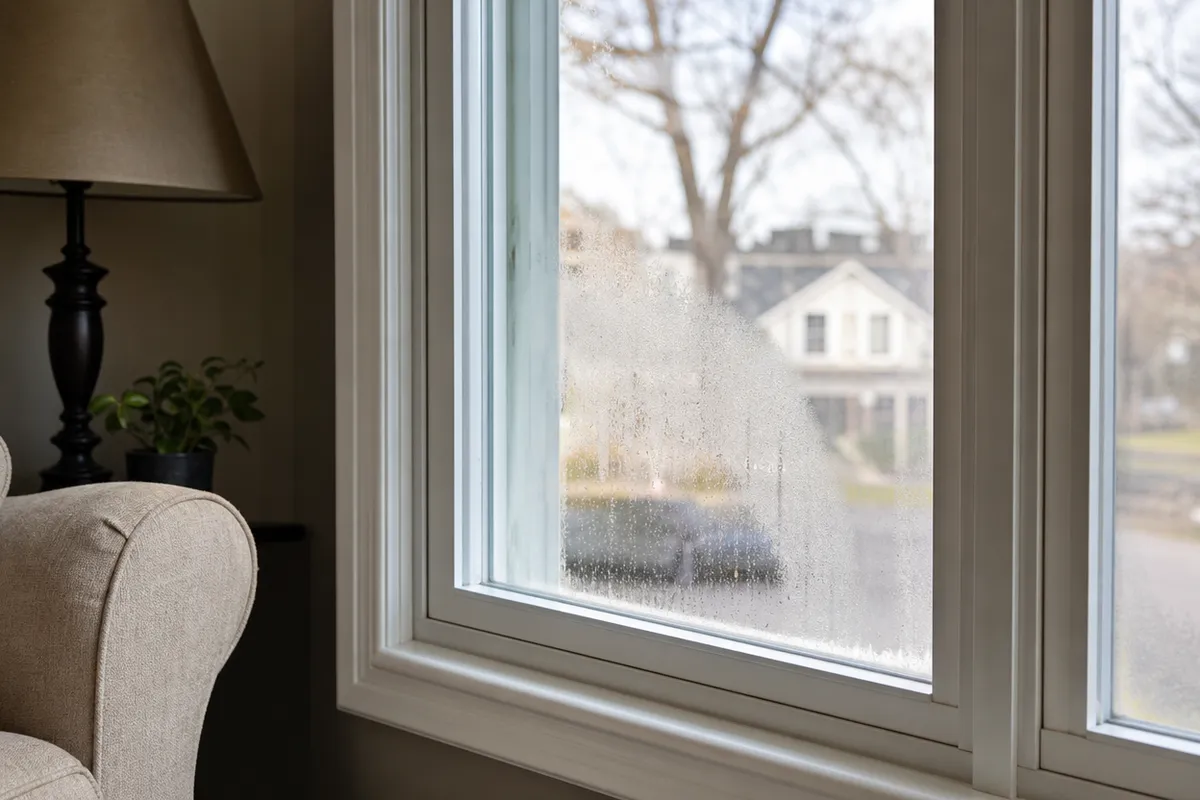
The 60-second window triage
Start with what you actually see or feel. Find your symptom in the table below — each row tells you the likely cause, whether it's DIY-friendly, whether it points to repair or replacement, and a realistic cost range based on national contractor averages.
| What it looks or feels like | Likely cause | DIY-fixable? | Repair vs. replace | Typical cost (national estimate) |
|---|---|---|---|---|
| Fog, haze, or moisture between the panes | Failed IGU (insulated glass unit) seal | No | Replace glass unit or window | $200–$600 per unit; $450–$1,500+ for full window |
| Cold air / a draft near the window | Worn weatherstrip, failed seal, or gaps | Sometimes | Repair first; replace if chronic | $5–$50 DIY weatherstrip; caulk $5–$15/tube |
| Water pooling on the sill or wall below | Failed caulk/flashing or clogged weep holes | Sometimes | Repair; replace if frame is damaged | $10–$300 to reseal; more if water damage |
| Cracked or shattered glass | Impact, stress, or thermal crack | No | Replace the glass or sash | $150–$600 per pane, size-dependent |
| Window sticks or won't open | Paint buildup, swelling, or track issue | Often | Repair | $0–$75 DIY; $75–$200 pro |
| Window won't stay up (slams shut) | Broken balance spring or spiral | Often | Repair | $10–$40 parts; $75–$150 pro |
| Won't lock or lock is loose | Worn or misaligned sash lock | Often | Repair | $10–$30 per lock DIY |
| Rattling or loose sash | Worn balances, loose stops, gaps | Sometimes | Repair; replace if widespread | $20–$150 |
| Rot, soft wood, or peeling on the frame | Long-term water intrusion | No | Replace | $450–$1,500+ per window |
| Mold or black spots around the frame | Chronic condensation/moisture | Sometimes | Fix moisture source; replace if seal failed | Cleaning $0–$50; replacement varies |
| Frost or condensation on the inside glass | High indoor humidity or single/failed pane | Sometimes | Repair humidity; replace old single-pane | $0 (humidity control) to full replacement |
Cost ranges are national contractor-average estimates; your region, window size, and material can move them meaningfully.
Know your window: the parts that fail
Diagnosing a window is far easier when you can name the part that's failing. Here are the components almost every double-hung or slider window shares:
- Sash — the moving frame that holds the glass. Most windows have an upper and lower sash.
- IGU (insulated glass unit) — the sealed sandwich of two (or three) glass panes with an inert gas layer between them. When its seal fails, you get fog *between* the panes.
- Balance — the spring or spiral mechanism hidden in the side jamb that holds the sash open. When it breaks, the window won't stay up.
- Weatherstrip — the flexible seal along the sash edges that blocks air and water. It's the cheapest and most common draft fix.
- Sill — the bottom horizontal ledge of the frame, and the most common spot for water damage and rot.
- Weep holes — small drainage slots at the bottom of the frame that let rainwater escape. When they clog, water backs up and leaks inside.
- Frame / jamb — the fixed outer structure anchored to the wall.
Diagnose by symptom
Here's what each symptom usually means, and the fix it points to — grouped the way problems actually show up.
Moisture and air
- Foggy or cloudy glass — the classic sign of a blown IGU seal. It can't be fixed from the outside; plan on a new glass unit or window.
- Drafts and cold spots — usually weatherstrip or seal failure. Try the cheap fix first: new weatherstripping or caulk.
- Condensation on the interior glass — often a humidity problem, not a broken window. Run exhaust fans or a dehumidifier before blaming the glass.
- Frost or ice on the inside — cold single-pane glass meeting indoor moisture. Control humidity first; aging single-pane windows are replacement candidates.
Water and structural damage
- Water leaking around the window — check the caulk, flashing, and weep holes before assuming the window itself has failed.
- Rotting wood frames — long-term water intrusion. Once the frame is soft, it's almost always a replace.
- Mold around the frame — a moisture symptom, not just a cosmetic one. Clean it, then fix the moisture source or it comes back.
- Cracked or broken glass — impact, stress, or thermal cracks. Replace the pane or sash; the crack will only spread.
Operation and hardware
- Window won't open or sticks — paint buildup, swelling, or dirty tracks. Usually a DIY fix.
- Window won't stay up — a broken balance. Parts are cheap and this is one of the most common window repairs.
- Window won't lock — a worn or misaligned sash lock, typically a $10–$30 part.
- Rattling or loose sash — worn balances or loose stops. Repair it unless it's happening across many windows.
- Failing weatherstripping — the #1 cheap draft fix on any window.
Performance
- High energy bills tied to your windows — air leaks and single-pane glass add up. See our guide to energy-efficient windows for what actually moves the bill.
- Too much outside noise — thin or single-pane glass insulates sound poorly. Modern multi-pane glass helps; see double-pane vs. triple-pane windows.
Repair vs. replace: the decision rule
A simple way to decide: repair the mechanism, replace the unit.
Repair when the problem is hardware or a seal you can reach: weatherstrip, balances, locks, caulk, or sticking tracks. These fixes are cheap, and they don't mean the window has failed.
Replace when the problem is inside the sealed unit or the frame itself: fog between the panes, a rotted sill, a cracked structural frame, or single-pane glass driving up your energy bills. Per national contractor averages and ENERGY STAR guidance, upgrading old, leaky, or single-pane windows to modern double- or triple-pane units can meaningfully cut heating and cooling loss — which is why replacement often beats repeatedly patching a dying unit. For a deeper cost-by-cost breakdown, see window repair vs. replacement.
Pro tip from our network contractors
A rule of thumb from the trades: if the repair costs more than about half the price of a new window, or the same window keeps failing, replacement is usually the better long-term investment.
When replacement is the real answer
If your triage points to a blown IGU, rot, or aging single-pane glass, patching it rarely lasts — those are the failures behind most of the signs you need new windows. Prices swing widely by region, window type, and installer, so start with what the project should run in our window replacement cost guide, then compare real bids from vetted local pros — here's how to choose a window installer without getting burned.
Get free, no-obligation window quotes from vetted local installers
Get free quotesFrequently asked questions
What are the most common window problems?
The most frequent issues are fogging or moisture between the glass panes (a failed seal), drafts and air leaks, water leaking around the frame, cracked glass, windows that stick or won't stay open, broken locks, wood rot, and mold or condensation. Most trace back to either a failed seal, worn hardware, or water intrusion.
Can foggy windows be fixed without full replacement?
Not reliably. Fog between the panes means the insulated glass unit's seal has failed. Defogging services exist but rarely restore insulation value. Replacing the glass unit — or the whole window if the frame is dated — is the durable fix, typically $200–$600 per unit as a national estimate.
How do I know if I should repair or replace a window?
Repair hardware and seals you can reach (weatherstrip, balances, locks, caulk). Replace when the failure is inside the sealed unit or the frame: fog between panes, rot, or single-pane glass costing you energy. A common trade guideline: if the repair costs more than half a new window's price, replace it.
Are drafty windows dangerous or just annoying?
Drafts aren't a safety hazard, but they waste energy and raise heating and cooling bills. Many drafts are fixed cheaply with new weatherstripping or caulk. If sealing doesn't help and the window is old or single-pane, replacement usually delivers the biggest long-term savings.
How much does it cost to fix common window problems?
It ranges widely. Small DIY fixes like weatherstripping or a new balance run $5–$40. Reglazing or a new glass unit is often $150–$600. A full replacement window commonly runs $450–$1,500+ installed, depending on size, material, and your local market. These are national estimates and vary by region.
Should I call a professional or fix it myself?
Hardware and seal issues — sticking sashes, worn weatherstrip, broken balances, loose locks — are typically DIY-friendly. Sealed-glass failure, rot, structural cracks, and full replacements call for a professional. When in doubt, a free quote from a local installer costs nothing and tells you the real scope.
Keep reading
Ready to get window replacement quotes?
Get matched with vetted, licensed local pros and compare free, no-obligation quotes.
100% free · No obligation · Licensed & vetted pros
Other projects worth pricing
Most homeowners bundle exterior work while the crew and access equipment are already on site — it usually costs less than booking each job separately. Quotes are free and carry no obligation.